Do I Need Planning Permission to Renovate My Spanish Property?
Obra Menor, Obra Mayor, declaración responsable - the permit system in Spain is not complicated once you understand it. This is the practical guide, written from a designer's perspective, for foreign buyers renovating on the Costa del Sol.
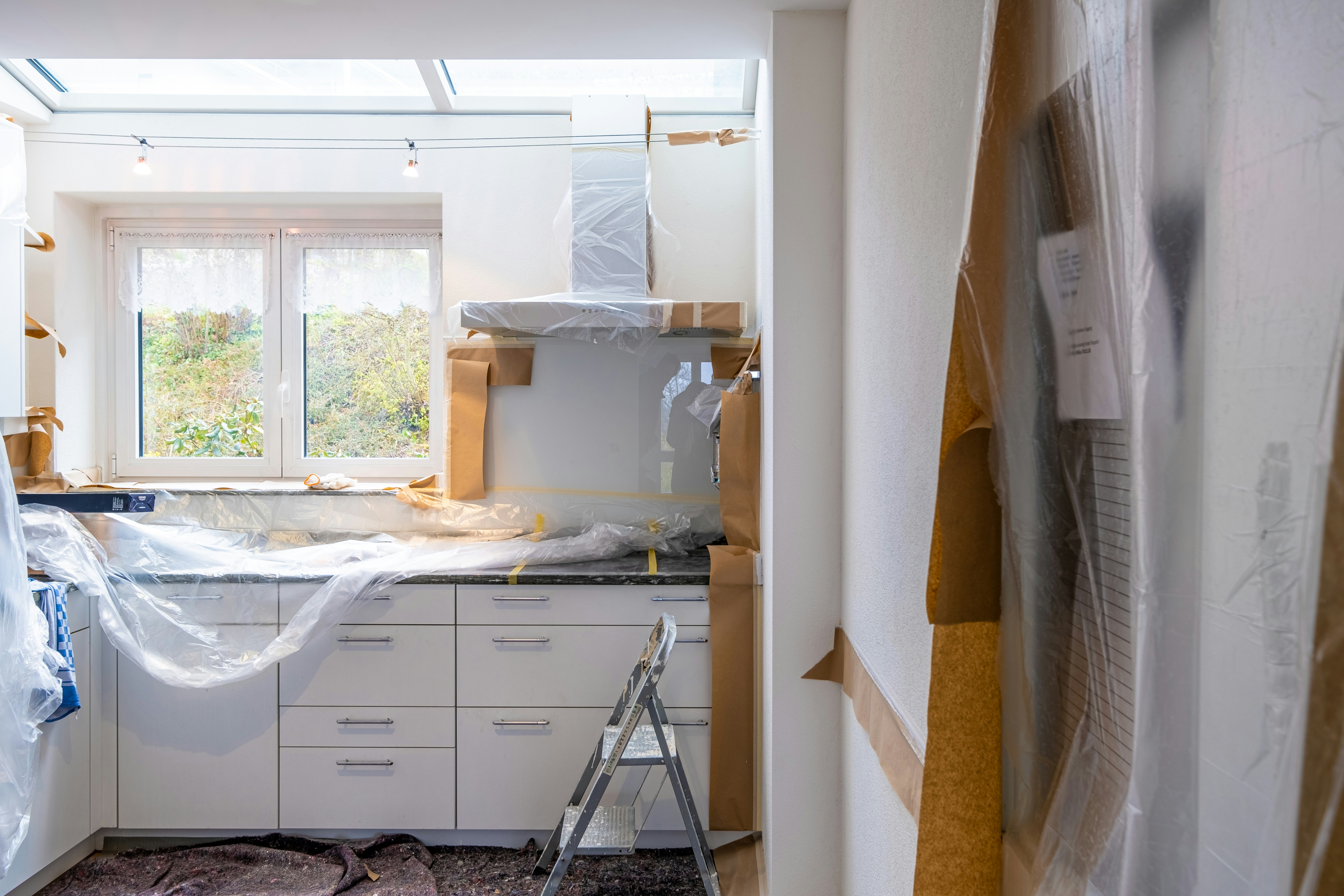
Most people who buy a property on the Costa del Sol have a vague idea that they will need "some kind of permit" to renovate. Most also assume their contractor will handle it. Both of these assumptions cost people money, time and sometimes the renovation itself when the council shows up and orders work to stop halfway through.
The permit system in Spain is not complicated once you understand it. It is just badly explained, mostly by lawyers writing for other lawyers and by builders who would rather tell you "do not worry about that" than walk you through the actual rules. This article fills that gap.
We work with foreign buyers on the Costa del Sol. Most of them have read three different articles by the time they get to us and they still cannot answer the basic question: do I need permission to do this renovation, or not? So here is the comprehensive guide, written from a designer's perspective, which means it focuses on what you want to do rather than on legal definitions.
The Quick Answer: Can I Renovate My Spanish Home Without a Building Permission?
The honest answer is: sometimes yes, mostly no and the bit that matters is knowing which side of the line your project falls on.
If you are repainting walls, changing flooring, swapping a kitchen like-for-like, or replacing sanitaryware in a bathroom without moving the plumbing, you can do this with the lightest form of paperwork - a declaración responsable - and in some cases nothing at all. Most contractors and homeowners on the coast handle this kind of work informally for purely cosmetic jobs.
The moment you touch anything structural, move plumbing or electrics through walls, change a window on the facade, alter the layout, add or remove anything from the exterior, or change the use of the property, you are in proper permit territory. This is licencia de obras (which most people call Obra Mayor or Obra Menor depending on the scope), and there is no informal route around it.
Get this wrong and the consequences range from a fine of a few thousand euros to an order to demolish what you have built and a problem that will follow the property when you try to sell it.
The Three Things You Might Need
Most articles you will read frame this as a binary choice: Obra Menor or Obra Mayor. That was true ten years ago. Since the 2021 Andalucía urban planning law (LISTA, Ley 7/2021), the system actually has three tiers and understanding all three matters.
Declaración Responsable
This is the modern, faster route for minor renovation work that does not affect the structure, facade, layout, or use of the property. You fill in a form (in Málaga it is called the DROBRAS), submit it to the ayuntamiento with the supporting paperwork, pay the tasa, and you can start work the moment it is registered. There is no waiting for approval.
The catch is that you are personally certifying that your project complies with all the rules. If it turns out it does not, the council can stop the work, fine you, and require you to legalise it retrospectively. The responsibility sits with you, not with the council reviewing your application.
In reality, this route is used mainly for medium-scope jobs where a contractor or architect is already involved: a full kitchen refit with some plumbing work, a bathroom retiled with new sanitaryware, layout tweaks on partition walls, replacing windows. For genuinely small work - painting a room, swapping a tap, replacing a toilet, changing a kitchen door front - almost no one files anything and the system is not really set up to chase that kind of thing. Officially it should be declared. In practice it is treated as routine maintenance and nobody bothers.
Licencia de Obras Menor
This is the formal licence for minor works that need pre-approval rather than self-certification. The line between what needs a declaración responsable and what needs an Obra Menor licence is set by each municipality. In Málaga, larger or more complex minor works - those needing a technical project, those touching certain protected elements, those in historic zones - get pushed into the Obra Menor licence track rather than the declaración responsable track.
You wait a few weeks for approval. The paperwork is more involved. The cost is similar to declaración responsable in most cases.
Licencia de Obras Mayor
This is the heavyweight licence required for any work that affects the structure, the building footprint, the facade, load-bearing elements, or the use of the property. It requires a technical project signed by an architect or arquitecto técnico, submitted to the ayuntamiento for full review.
In Málaga, Obra Mayor approval takes 2 to 4 months, sometimes longer for complex cases. Critically, the silencio administrativo (administrative silence) is negative for Obra Mayor. That means if the council does not respond within the legal deadline, your licence is not automatically granted. You wait until it is expressly approved in writing. Starting work without that written approval is one of the most expensive mistakes you can make.
What Triggers What: A Practical List
This is the section most readers actually need. We have grouped common renovation work by the permit type it typically triggers in Málaga and most Costa del Sol municipalities. Local rules vary slightly between councils, so always confirm with your ayuntamiento or your architect before assuming.
Genuinely No Paperwork in Practice (Routine Maintenance)
Officially these technically fall under declaración responsable, but in practice nobody files anything and the system does not chase it.
- —Repainting walls and ceilings (interior)
- —Replacing individual sanitaryware items (toilet, basin, tap)
- —Replacing kitchen worktops, cabinet doors, or appliances without changing layout
- —Replacing interior doors
- —Repairing existing plumbing or electrical points without rerouting
- —Replacing a few floor tiles or patch repairs
Usually Declaración Responsable (Where Paperwork Is Actually Filed)
- —Full kitchen refit with some plumbing changes (moving the sink, dishwasher, gas points)
- —Full bathroom refit with retiling and new sanitaryware
- —Replacing flooring throughout the property
- —Repainting exterior walls or anything touching the facade
- —Replacing windows like-for-like (same size, same opening, same frame style)
- —Installing solar panels (in most Andalucían municipalities)
- —Moving non-load-bearing partition walls
- —Significant rewiring or new lighting plans
Usually Licencia de Obras Menor
- —Changing flooring type significantly where it affects soundproofing or building regulations
- —Replacing windows with different size, opening direction, or affecting the facade appearance
- —Installing air conditioning units that affect the facade
- —Larger or more complex minor works that need a technical project
- —Anything pushed up from declaración responsable territory by the local ordenanza
Always Licencia de Obras Mayor
- —Removing or modifying load-bearing walls
- —Changing the building footprint (extensions, new rooms, raising the roof)
- —Altering the facade (new openings, new balconies, removing balconies)
- —Changing the use of the property (residential to commercial, dwelling subdivision)
- —Adding or modifying terraces, balconies, pergolas attached to the structure
- —Pool installation
- —Major plumbing reconfiguration (relocating bathrooms, kitchens, soil stacks)
- —Anything in a protected zone (historic centre, BIC, edificios protegidos)
The honest grey zone
There is one category of work that officially needs paperwork but very often gets done without it: moving electrical and lighting points within an existing renovation when you are already replumbing or repainting anyway. The line you do not want to cross is anything visible from the outside, anything structural, or anything affecting the building's official footprint or use. Stay inside that line and the system is forgiving. Cross it without paperwork and the system will make you pay for it.
How to Apply: Who Does What
For declaración responsable and Obra Menor, the homeowner or their representative (which can be the contractor, the architect, or a gestor) submits the paperwork to the ayuntamiento. In Málaga this is done through the Gerencia Municipal de Urbanismo, Obras e Infraestructuras (GMU), increasingly online via the sede electrónica. The process needs:
- —The official form (DROBRAS in Málaga for declaración responsable)
- —A description of the works
- —A technical memoria or project, signed by a qualified professional, where the scope requires it
- —Floor plans showing what is being changed
- —Justification of the project budget for the tasa calculation
- —Proof of property ownership
For Obra Mayor, the same body handles it but the documentation jumps significantly. You need a full proyecto técnico prepared and signed by an architect, with structural calculations, plans, energy certificates, and compliance with the building code (CTE) and the local urbanistic plan (PGOU). Expect to pay an architect €1,500 to €5,000 for the project depending on complexity.
Who actually owns the responsibility of submitting? Legally, the property owner. In practice, your contractor may offer to "handle it" and your architect may include it in their scope. Be very clear about who is doing what in writing, because if it does not happen, the legal responsibility lands on you, not them.
What It Costs
For the full breakdown of permit costs and how they fit into the overall renovation budget, see our renovation cost article. There are two separate charges to the council on every renovation: the tasa (a small admin fee for processing your paperwork) and the ICIO (a tax on the construction work itself). Combined:
Permit costs overview (Málaga, 2026)
Declaración responsable and Obra Menor
Around 2-4% of your project budget. On a €60,000 renovation, roughly €1,200 to €2,400.
Obra Mayor
Around 3-6% of your project budget. On a €150,000 renovation, roughly €4,500 to €9,000.
Architect technical project for Obra Mayor
€1,500 to €5,000 separately. Other Costa del Sol municipalities vary but the order of magnitude is the same.
What Foreign Buyers Get Wrong
"The Contractor Will Handle the Permit"
Many will say this. Some will actually do it. Many will not, or will do it badly. The legal responsibility for the licence sits with the property owner regardless of who promised to handle it. If your contractor starts work without the right paperwork, the fine lands on you, the demolition order lands on you, and the resale problem lands on you. Get the licence reference number in writing before any work begins on the property. If your contractor cannot or will not provide it, that is a serious red flag.
"It Is a Small Job, I Do Not Need Anything"
This is half right. Genuinely small work is treated as routine maintenance and almost nobody files paperwork for it. The category that catches people out is the middle ground: a full kitchen refit with plumbing changes, a bathroom retile, replacing windows on the facade, moving partition walls. These feel small to the homeowner because they are happening inside one apartment, but they sit officially within declaración responsable or Obra Menor territory. If your contractor is offering to do this work without any paperwork at all, that is a signal worth asking questions about.
"I Bought It, So I Can Do What I Want With It"
Spanish urban planning treats your property as part of a broader urban fabric. The facade is partly a public matter because it is visible from the street. The footprint is regulated because it affects neighbours and the urbanistic plan. Ownership gives you rights, but those rights operate within a planning system that does not bend just because you own the building.
"I Do Not Need an Architect for This"
For declaración responsable and small Obra Menor jobs, often true. For anything structural, anything affecting the facade, or anything that needs an Obra Mayor licence, the architect is not optional. The project has to be signed by a colegiado professional. Without that signature, the licence cannot be granted.
The Reality on the Ground
For purely cosmetic interior work in an apartment - paint, flooring, swapping a kitchen, retiling a bathroom without moving anything - many homeowners and contractors on the Costa del Sol proceed without filing any paperwork. The council does not have inspectors checking every apartment in Málaga. We are not endorsing this approach. We are telling you it exists, because pretending otherwise is dishonest and any contractor on the coast can confirm it.
The point where the grey zone ends and the real risk begins is the moment your work touches anything visible from the outside, anything structural, or anything affecting the property's official designation. The minute you cross those lines, you are squarely in territory where you need the right licence, in writing, before work starts. Andalucía sanctions for unlicensed structural work range from €3,000 to €60,000, and the council can order works paralysed mid-renovation or demolished.
There is also a resale problem that catches people years later. Any structural work you did without permission will show up in due diligence when you sell. The buyer's lawyer will spot the discrepancy between the cadastral record and the actual property. They will ask for the licence reference. If you cannot provide it, the sale either collapses or the price gets renegotiated significantly downward.
What Good Practice Looks Like
When we work with clients on a renovation, the permit conversation happens at the start, not after the design is finalised. The reason is simple: the type of work you want determines the licence you need, and the licence you need determines the timeline, the cost and sometimes whether the work is even possible within the building's constraints.
A good process looks like this. The designer establishes the scope of what you want to change. The architect confirms which licence track applies. The paperwork goes in early so that approval lines up with when you actually need to start construction. The contractor only begins work once the paperwork is in place. The whole thing is documented so that the work matches the licence, and you have a clean paper trail when you eventually sell.
This is the boring part of a renovation. It is also the part that protects you from every horror story you have ever read about Spanish renovations going wrong.
If you have a property in Spain and you are thinking about a renovation - we can help you make sense of it. Get in touch at gosia@thedreamspaces.com or fill in a 2-minute form to get a conversation going.

Gosia Szwed-Pruvot
Founder, The Dream Spaces
I am the founder of The Dream Spaces, an interior design studio in Málaga working with foreign buyers across the Costa del Sol. The studio specialises in design-led properties that perform commercially, from holiday lets to mid-term rentals to private homes.
This article reflects building permit rules and procedures in Andalucía and on the Costa del Sol as of May 2026. The legal framework is set by LISTA (Ley 7/2021), its Reglamento General (Decreto 550/2022), and Decreto-ley 3/2024, applied locally through each municipality's own ordenanzas. Specific requirements vary between councils and change over time. Always confirm current requirements with your local ayuntamiento and your architect or gestor before starting any renovation work.